When the Living Room Becomes a Temple: A Practical Guide to a Vitthal-Rukmini Shrine in a Small US Apartment

Photo: Ms Sarah Welch, CC0, via Wikimedia Commons
In many American apartments, square footage is the first thing sacrificed to rent, commute, and city life. A spare room for prayer is rarely available. Yet the devotional traditions surrounding Vitthal and Rukmini have always traveled lightly. A shrine is not measured by the size of the room but by the steadiness of the attention given to it. For a renter in Chicago, a graduate student in Boston, or a family in a one-bedroom near Los Angeles, a small mandir can be both practical and profound.
Begin with the limits of the room
A home shrine should be safe, clean, and respectful. Before choosing a murti or a shelf, consider the realities of apartment living. Lease agreements may restrict wall fixtures, so freestanding shelves and anchored bookcases are often wiser than drilled brackets. Candles should never sit near curtains or paper. Incense requires ventilation; a window that opens or a small air purifier can keep the practice comfortable for everyone in the household. If the apartment is shared with roommates or family members who do not practice, a cabinet that closes or a curtain that draws can create a gentle boundary without making the space inaccessible.
Traditional guidance often favors a northeast corner or an east-facing orientation, because the morning light is associated with clarity and auspicious beginnings. In an apartment, these directions may be impossible. The practical rule is to place the shrine where it can be seen, honored, and kept clean. Avoid positioning it against a bathroom wall, at the foot of a bed, or in a high-traffic passage where it might be knocked. A living room corner, a study shelf, or the top of a low bookcase can serve well.
Choosing the murti or image
A Vitthal-Rukmini shrine should center on the divine pair. The murti may be brass, marble, wood, or clay; a framed image is equally acceptable. What matters is that the representation is treated with care and is not crowded by unrelated objects. For small apartments, a single pair of modest size is usually better than a large collection. If a murti is not yet available, a clean framed print can hold the place of honor while the family decides.
There is no requirement that a home shrine be elaborate or expensive. In many households, the murti is accompanied by a small lamp, a water cup, and a flower holder. A tiny bell is optional. The aim is not to reproduce a temple hall but to create a focal point for remembrance. When children are present, let them help choose a clean cloth or arrange a flower. This teaches reverence more effectively than instruction alone.
The minimum that is enough
A workable apartment shrine can be assembled from a few ordinary items: a small table or shelf, a clean cotton cloth, a metal or clay lamp, a cup for water, a small incense holder, and a dish for offerings. Keep the surface uncluttered. Store extra items in a closed box nearby rather than letting the shrine become a storage shelf.
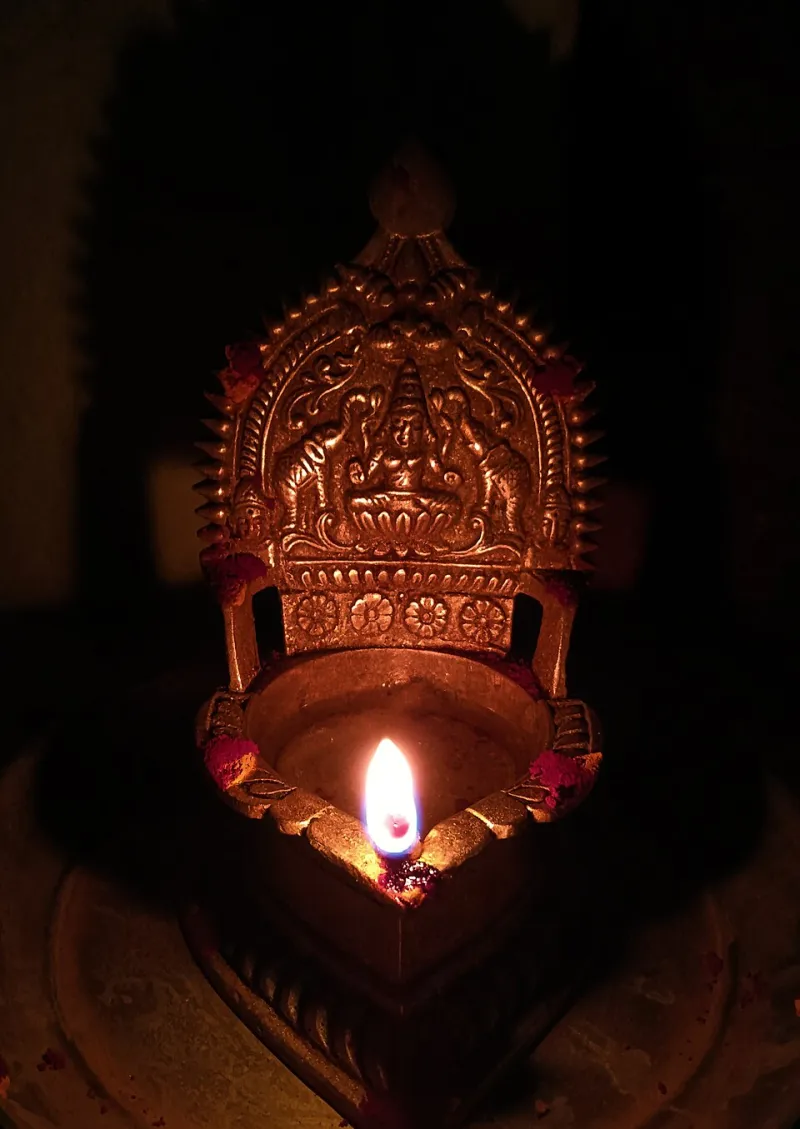
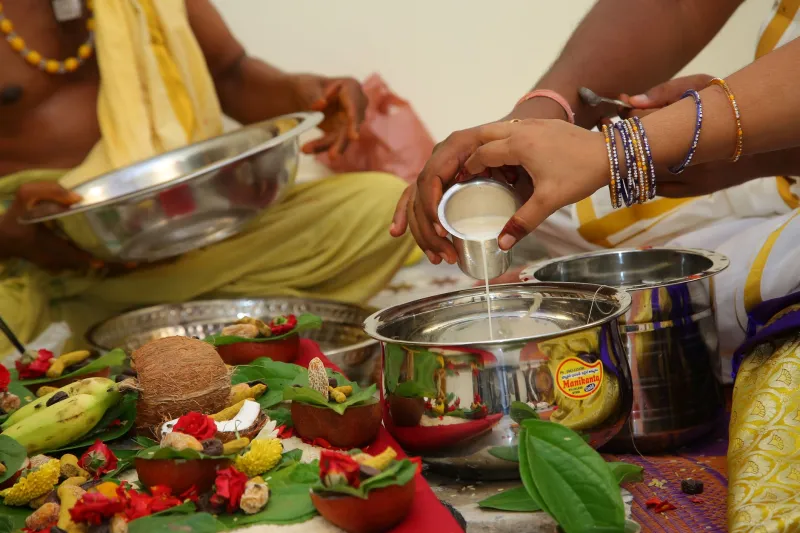
The offerings can be equally simple. Fresh water is the most universal. A single flower, a piece of fruit, or a small portion of cooked food may be offered. The tradition does not require abundance; it requires intention. If incense is not practical because of smoke or allergies, a lamp alone is sufficient. If a flame is not permitted in the building, a battery-operated lamp can serve as a temporary measure, provided the family understands it as a concession rather than a replacement for traditional practice.
A daily rhythm for apartment life
A short morning practice can begin by opening the curtain or turning on a soft light, replacing the water, and lighting the lamp. A single prayer, a line of an abhang, or a few minutes of quiet repetition of the divine name is enough to mark the day as belonging to something larger than the commute. In the evening, the lamp can be lit again, and a brief offering of incense or a flower can close the day.
Weekly cleaning is part of the practice. Dust the murti and shelf, wash the water cup, and replace wilted flowers. Once a month, a deeper cleaning can include washing the cloth and checking the lamp. On festival days, the shrine may be decorated modestly, but the apartment need not be transformed into a hall. A few guests, a simple meal, and a shared song may be more in keeping with the space than an elaborate event.
The symbolism behind the choices
Every element can carry meaning without becoming rigid. East-facing light recalls the dawn and the seeking of knowledge. Water represents clarity and hospitality. The lamp stands for the light of awareness and the presence of the divine. A flower expresses surrender, since it is offered without expecting anything in return. Cleanliness is not mere hygiene; it is a form of respect. A curtain or closed cabinet creates a sacred boundary within a shared home, reminding the household that not every corner is ordinary.
For a Vitthal-Rukmini shrine, the standing posture of Vitthal and the gracious presence of Rukmini together suggest devotion and companionship. The shrine does not need to be large to hold that teaching. It needs only to be tended. In a small apartment, that tending may take ten minutes a day. Over months and years, those minutes can quietly reshape a room, and the people who live in it.