Twenty Minutes Before the Train: A Warkari-Inspired Morning Practice for the Working American
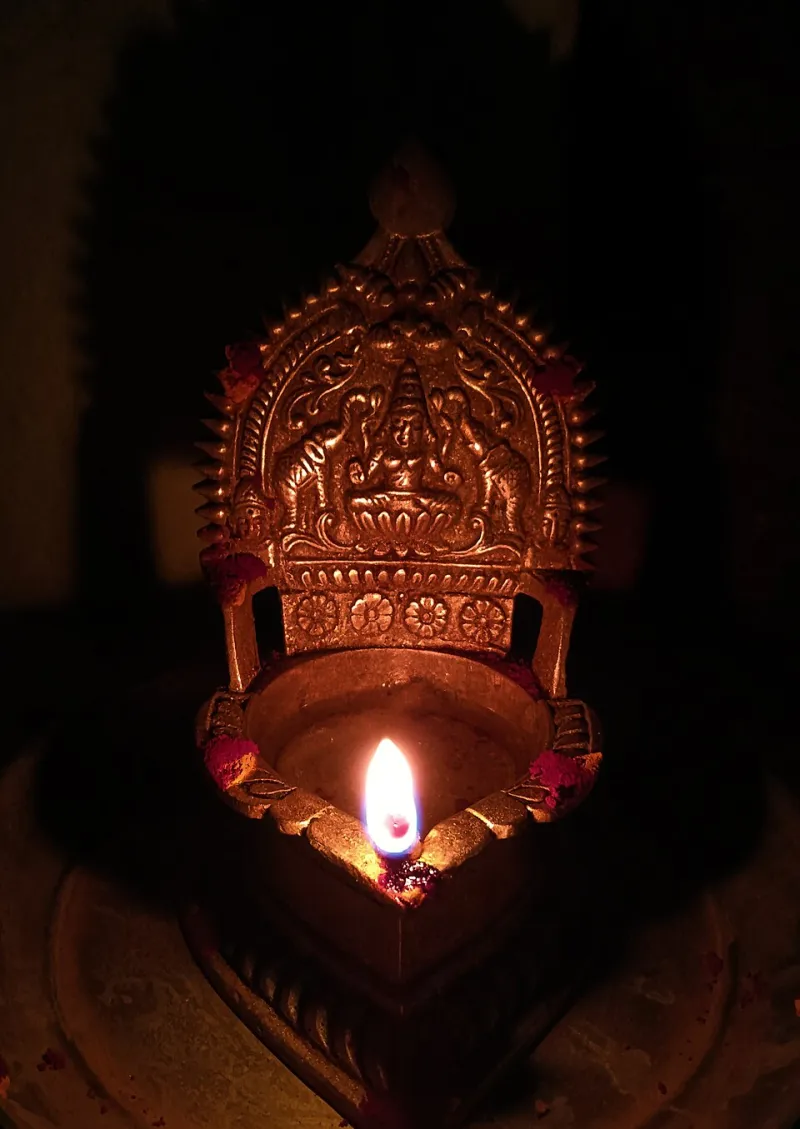
Photo: Saral Shots, CC0, via Wikimedia Commons
There is a particular moment familiar to millions of American workers: the coffee is brewing, the phone is already glowing with overnight emails, and the day has technically begun before you have spoken a single intentional word. Into that moment, the Warkari tradition of Maharashtra offers something quietly radical — a structure for beginning the day not with consumption, but with devotion.
The Warkaris, the pilgrim-singers who walk to Pandharpur twice a year in honor of Vitthal and Rukmini, do not reserve their spirituality for the pilgrimage road. Their daily practice — the puja, the singing of abhangs, the disciplined rhythm of remembrance — travels with them. For American practitioners juggling school runs, stand-up meetings, and red-eye flights, that portability is precisely the point.
Why Twenty Minutes Is Enough
A common misconception holds that devotional practice requires large blocks of time. In fact, the Warkari tradition prizes bhava — the inner disposition of devotion — over duration. Sant Tukaram's abhangs were sung by farmers and tradespeople, people with work to do. The goal of a morning routine is not to replicate a monastery; it is to establish a fixed point of contact with the divine before the world makes its claims on your attention.
Twenty minutes, practiced daily, outperforms two hours practiced sporadically. Consistency is the discipline.
The Template: A 20-Minute Morning Bhakti Routine
Minutes 0–3: Arrival and Stillness. Before reaching for the phone, sit on the edge of the bed or in a chair. Feet on the floor. Three slow breaths. Silently offer the day ahead — the meetings, the errands, the difficult conversation — to Vitthal. This is your sankalpa, the day's dedication.
Minutes 3–8: Abhang Recitation. Choose one abhang — a single one, not a playlist. Sant Dnyaneshwar and Sant Tukaram both wrote short verses that can be learned by heart in a week. If you do not yet know Marathi, many American kirtan groups and recordings provide transliterations and translations. Singing aloud is preferable; the vibration matters more than the pronunciation.
Minutes 8–12: A Moment of Darshan. Keep a small image of Vitthal and Rukmini — a brass murti, a framed print, even a photograph on a dedicated shelf. Light a diya if your living situation permits; if not, a moment of gazing with full attention substitutes. Darshan is not passive looking. It is the practice of being seen.
Minutes 12–17: Reading or Reflection. One short passage: a verse from the Dnyaneshwari, a commentary on an abhang, a paragraph from a book on the Warkari saints. Read slowly. Stop when something stops you.
Minutes 17–20: Seva Intention and Close. Name one concrete act of service you will perform today — an act of patience with a coworker, a call to a lonely relative, a donation. The Warkari path insists that devotion and conduct cannot be separated. Close with a brief Namaskar and begin the day.
Adapting for Real Lives
For commuters. The train or bus ride can carry minutes 3 through 12 entirely. Noise-canceling headphones playing a recorded abhang, followed by silent reflection, converts dead transit time into practice time. Several practitioners in New Jersey's large Marathi community report that the Northeast Corridor line has become, in their words, a rolling temple.
For parents of young children. Practice does not need to be solitary. A toddler on your lap during abhang recitation is not an interruption; it is an early transmission. Many second-generation parents find that singing — even imperfectly — holds a child's attention in a way spoken prayer does not.
For shift workers and early risers. The routine is anchored to waking, not to a clock time. A nurse coming off a night shift can perform the same sequence before sleep, honoring the principle rather than the hour.
What Practitioners Report
Those who sustain the routine describe a common effect: the day's first setback loses its power to define the mood. "I used to open my laptop and feel behind before 7 a.m.," says one practitioner in the Seattle area. "Now I've sung to Vitthal before I've read a single email. Whatever happens after that feels like it's happening inside a larger story."
Another, a father of three in suburban Chicago, describes the diya on the kitchen shelf as "the one thing in the house that never asks anything of me. I just show up for it."
Starting Small and Staying With It
Begin tomorrow with only the first three minutes — the stillness and the dedication. Add the abhang in week two, the darshan in week three. Habits built by accretion survive; habits built by ambition collapse by Thursday.
The Warkaris walk hundreds of miles to stand before Vitthal. The rest of us, most mornings, only need to walk from the bed to the shelf. The distance is shorter. The destination, the tradition insists, is the same.