Beyond the Calendar: The Quiet Significance of Vitthal Jayanti and Rukmini Vivah for the American Diaspora
Every November, millions of Americans participate in — or at least recognize — the spectacle of Diwali. Workplaces host celebrations. School curricula include it. Major retailers have begun marketing to it. The festival of lights has achieved, in the American cultural landscape, a degree of mainstream visibility that would have been unimaginable a generation ago.
This visibility is, in many respects, a genuine achievement. Yet it has also produced a curious side effect: the consolidation of Hindu festival culture, in the American imagination, around a handful of well-known observances, while dozens of equally significant celebrations remain entirely invisible to the broader public — and, increasingly, underobserved even within diaspora communities.
Among the most quietly significant of these overlooked observances are Vitthal Jayanti, marking the appearance of Lord Vitthal, and Rukmini Vivah, commemorating the sacred marriage of Vitthal and Rukmini. For the communities of Maharashtrian, Kannada, and broader Vaishnava heritage that have established themselves across the United States, these festivals are not peripheral. They are foundational. And their relative obscurity, far from diminishing their importance, may actually intensify the meaning they hold for those who observe them.
What These Festivals Actually Commemorate
Vitthal Jayanti — sometimes observed in conjunction with the broader Vaishnava calendar marking Krishna's appearance, and sometimes according to the specific traditions of Pandharpur — celebrates the manifestation of Lord Vitthal in the world. In the Warkari tradition, Vitthal is not simply a local deity; he is understood as the complete, accessible form of the Divine: the Lord who stands with arms on hips, waiting with infinite patience for his devotees to arrive. The Jayanti observance is thus not merely a birthday celebration in the conventional sense. It is a contemplation of the nature of divine availability — the astonishing theological claim that God is not hidden, not remote, not indifferent, but present and waiting.
Rukmini Vivah commemorates the marriage of Rukmini Devi to Lord Vitthal — an event whose narrative dimensions we have explored elsewhere on this site, but whose annual observance carries its own distinct significance. The ritual re-enactment of the divine marriage is, in the Vaishnava framework, a participation in the cosmic event it represents. To witness or celebrate the union of Vitthal and Rukmini is not merely to remember a story. It is to affirm, in a liturgical register, that love — consecrated, chosen, and divinely sanctioned — is among the most fundamental structures of reality.
Cyclical Time and the American Calendar
One of the most profound challenges facing Hindu diaspora communities in the United States is the collision between two fundamentally different understandings of time. The dominant American calendar is linear and secular: time moves from past to future, and its landmarks are either civic (Independence Day, Thanksgiving) or commercial (back-to-school season, the holiday shopping window). The Hindu sacred calendar, by contrast, is cyclical. Its festivals do not merely commemorate events that happened once; they return the observant community to those events, making them present again.
This distinction matters enormously for understanding what is at stake when festivals like Vitthal Jayanti or Rukmini Vivah go unobserved. It is not simply that a cultural tradition is being forgotten — though that concern is real. It is that a particular relationship with time itself is being attenuated. The cyclical calendar is, among other things, a technology for maintaining continuity: with one's ancestors, with one's tradition, and with the rhythms of a cosmos understood as fundamentally sacred.
For second-generation and third-generation Indian Americans navigating between two cultural frameworks, this is not an abstract philosophical point. It is a lived experience. Many young adults within Maharashtrian and Vaishnava communities in cities like Chicago, Houston, New Jersey, and the San Francisco Bay Area report that the observance of lesser-known festivals — precisely because they require deliberate effort and are not supported by mainstream cultural scaffolding — carries a particular intensity of meaning. You do not observe Vitthal Jayanti because your office gave you the day off. You observe it because you chose to.
How Diaspora Communities Are Reimagining Observance
Across the United States, Vitthal-Rukmini temples and cultural organizations have developed creative approaches to maintaining these festivals within the constraints of American life. Weekend observances replace weekday celebrations. Digital platforms extend the reach of rituals performed in physical temples, allowing community members in geographically dispersed locations to participate in real time. Some communities have developed abbreviated home-practice formats that allow families to observe the essential elements of the festivals without requiring the extended time commitments that full traditional observance demands.
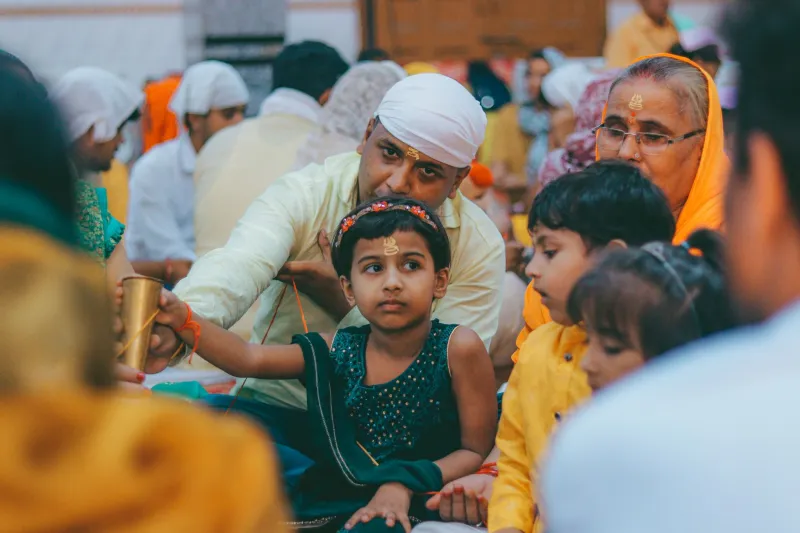
In several cities, Rukmini Vivah has become an occasion for inter-generational gathering that serves simultaneously as religious observance and cultural transmission. Elders share stories of how the festival was observed in Maharashtra or Karnataka. Young adults contribute organizational energy and digital documentation. Children participate in ritual elements calibrated to their age and understanding. The result is an event that is simultaneously traditional and adaptive — honoring the form of the original while finding new vessels for its content.
Some communities have also begun connecting these festivals explicitly to broader American cultural conversations. The narrative of Rukmini Vivah — a woman who chose her partner against familial pressure, who acted with both devotion and agency, whose love was both personal and cosmically significant — resonates with young Indian Americans who are themselves navigating questions of autonomy, family expectation, and spiritual identity. The festival, in these contexts, is not merely a religious observance. It is a cultural conversation.
What These Festivals Teach About Divine Relationship
At their theological core, both Vitthal Jayanti and Rukmini Vivah are meditations on the nature of divine relationship. Vitthal Jayanti asks: What does it mean that God is present — not abstractly, not theoretically, but actually, patiently, accessibly present? Rukmini Vivah asks: What does it mean that the Divine enters into relationship — that the Lord accepts and celebrates the love of his devotees, that union with God is not merely possible but celebrated?
These are not small questions. In a cultural moment when many Americans are seeking forms of spirituality that are both personally meaningful and cosmologically serious, the festival calendar of the Vitthal-Rukmini tradition offers a structured, community-based, narratively rich engagement with questions that matter deeply.
The relative obscurity of these festivals in American public life is, in this sense, an opportunity as much as a loss. For the communities that observe them, Vitthal Jayanti and Rukmini Vivah remain genuinely sacred — not diluted by overexposure, not flattened into cultural performance. They are, for those who keep them, among the year's most significant moments: a return, in the midst of an ordinary American week, to something very old and very alive.
Keeping the Flame
The work of maintaining these observances in the American context is, at its heart, an act of love — for the tradition, for the community, and for the generations that will inherit what is or is not preserved. It requires neither the rejection of American life nor the abandonment of Hindu heritage. It requires, instead, the creative, intentional, and ultimately joyful work of finding ways to honor both.
For those who have never observed Vitthal Jayanti or Rukmini Vivah, the invitation is open. Contact your nearest Vitthal-Rukmini temple or Maharashtrian cultural organization. Ask when these festivals are observed. Show up. What you will find is a community that has been waiting, with something of the patience of Vitthal himself, for exactly this kind of arrival.