Vithoba in the Valley: How Silicon Valley's Indian-American Professionals Draw Strength from an Ancient Devotional Tradition

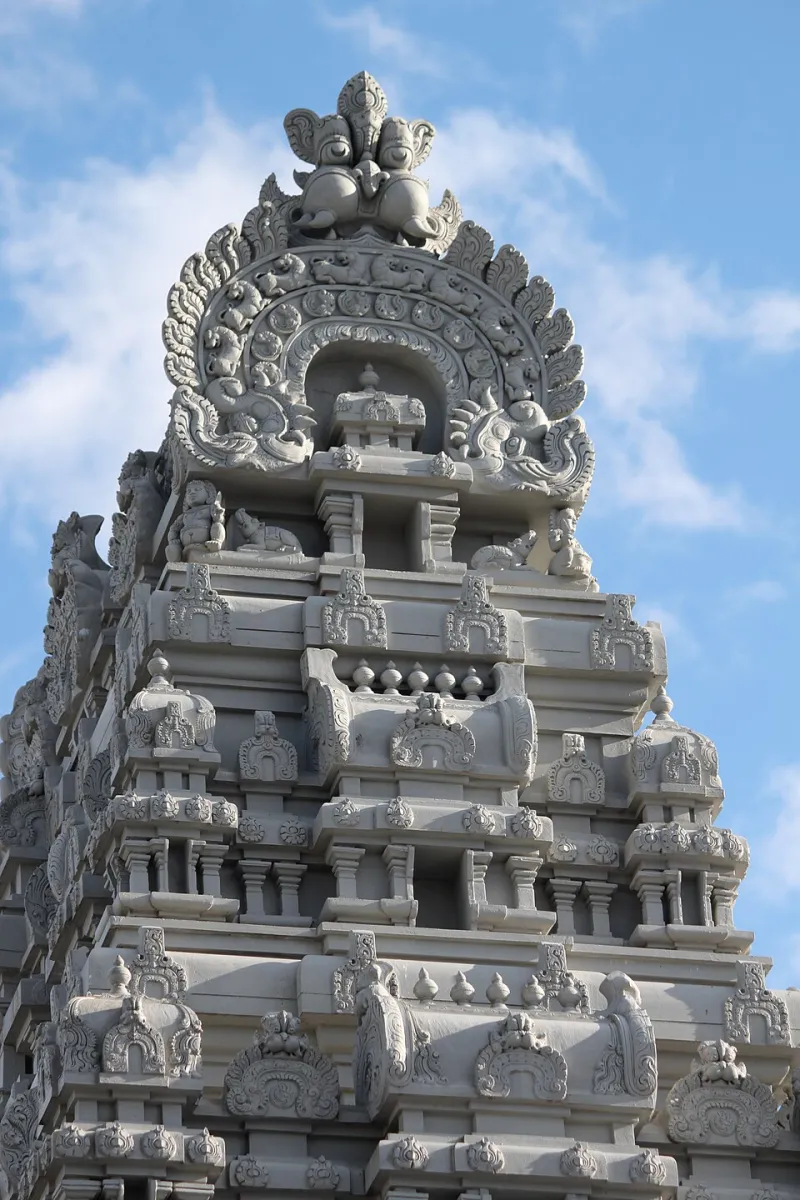
Photo: Mike Hurt, CC BY-SA 2.0, via Wikimedia Commons
The open-plan offices of the San Francisco Bay Area are not, at first glance, the obvious inheritors of a devotional tradition born on the banks of the Bhima River in Maharashtra. Yet for a growing number of Indian-American professionals in the technology and entrepreneurship sectors, the Vitthal-Rukmini bhakti tradition — centered on the deity enshrined at Pandharpur — has become a source of grounding, ethical clarity, and resilience that no business school curriculum has managed to replicate.
This is not a story about corporate spirituality programs or mindfulness apps. It is a story about people who grew up hearing abhangas sung in their grandparents' homes, who carried small photographs of Vithoba in their wallets through graduate school, and who have, over the course of demanding careers, arrived at a considered understanding of what that inheritance means for how they work, lead, and make decisions under pressure.
The Varkari Philosophy as a Leadership Framework
The Varkari sampradaya — the devotional movement centered on Vitthal — is distinguished from many other Hindu traditions by its radical egalitarianism and its emphasis on direct, unmediated devotion. The saints of the tradition, from Dnyaneshwar to Tukaram to Janabai, came from every caste and social position. Their abhangas, the devotional poems that form the tradition's literary backbone, consistently return to themes of surrender to the divine, the equality of all souls before Vitthal, and the ethical imperative of compassionate service.
For professionals navigating the intensely hierarchical and competitive environments of American enterprise, these themes carry unexpected practical weight. The Varkari emphasis on equanimity — on maintaining inner steadiness regardless of external circumstance — maps onto what contemporary leadership literature describes as emotional regulation and psychological safety. The tradition's insistence on service as a spiritual practice resonates with the servant-leadership philosophy that has gained significant traction in management thinking over the past two decades.
What distinguishes the Vitthal-Rukmini framework from its secular management counterparts, however, is its rootedness in a specific cosmological story. Vitthal stands with his hands on his hips, waiting for his devotees with inexhaustible patience. That image — a god who waits, who does not demand, who receives whatever his devotees bring — communicates something about the nature of genuine leadership that a Harvard Business Review case study cannot quite reach.
Devotion as Decision-Making Architecture
Several Indian-American professionals in technology-adjacent fields have described, in conversations with this publication, a practice of returning to Vitthal-Rukmini devotion specifically during periods of high-stakes decision-making. The practice varies: some maintain a daily ritual of reciting abhangas before beginning their workday. Others keep a small murti or image at their home workspace and pause before major calls or presentations to center themselves in that devotional space.
The common thread is not superstition or the expectation of divine intervention. It is the deliberate use of devotional practice to interrupt the anxiety cycle that high-pressure environments tend to generate. By consciously placing a decision or challenge within the larger framework of Vitthal's care and the tradition's philosophical teachings, these practitioners describe a shift in perspective that allows them to act from clarity rather than fear.
This is consistent with what researchers studying contemplative practices in professional contexts have documented: that rituals which connect individuals to something larger than immediate circumstances reliably reduce cortisol-driven decision-making and improve cognitive flexibility. The Vitthal-Rukmini tradition offers this function with the added dimension of cultural continuity — a thread connecting the practitioner to generations of ancestors who faced their own uncertainties with the same invocation on their lips.
Community as Competitive Advantage
Beyond individual practice, the communal dimensions of Vitthal-Rukmini bhakti have proven particularly significant for Indian-American professionals navigating the social complexities of American professional life. The tradition's emphasis on the wari — the collective pilgrimage to Pandharpur — encodes a model of community that is neither transactional nor hierarchical. Pilgrims walk together regardless of social or economic status. The journey itself is the point.
In the United States, where Indian-American professionals often experience the dual pressure of cultural assimilation and community maintenance, the Vitthal-Rukmini tradition offers a community model that is simultaneously ancient and adaptable. Temples and devotional gatherings centered on this tradition in cities like San Jose, Fremont, and Chicago have become spaces where professionals can step outside the performance demands of their careers and participate in something that does not evaluate them by their title or their last funding round.
Several professionals note that the relationships built in these devotional spaces have also yielded professional benefits — not through networking in the conventional sense, but through the kind of deep trust that develops between people who have shown each other their most sincere selves. The tradition, in this sense, creates social capital of a quality that professional networking events rarely achieve.
Carrying Pandharpur Forward
For the Indian-American generation that grew up between two cultures, the Vitthal-Rukmini tradition occupies a particular emotional and philosophical position. It is not the generic Hinduism of temple calendars or festival celebrations. It is a specific, historically rich, intellectually demanding tradition with a canon of poetry, a theology of devotion, and a social philosophy of radical inclusion.
To carry that tradition into a Silicon Valley career is not to compartmentalize it. It is to insist that the ancient and the contemporary are not opposites, that a person can write code and chant abhangas, that the patience of Vithoba and the patience required to build something lasting in a volatile industry are, at some level, expressions of the same virtue.
At Shree Vitthal Rukmini, we recognize these professionals not as anomalies but as continuations — the latest iteration of a tradition that has always found ways to be relevant to the lives its devotees are actually living.