The God Who Refuses to Sit: What Vitthal's Standing Posture Says to a Hurried Nation
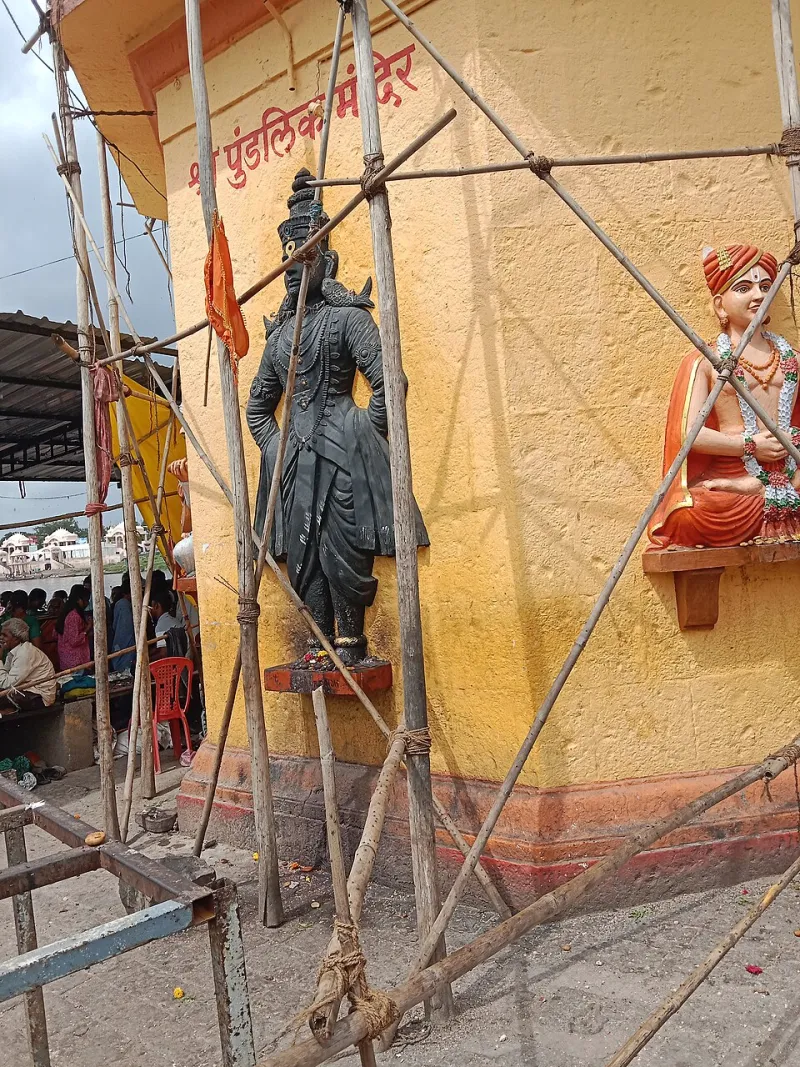
Photo: A.Murali, CC0, via Wikimedia Commons
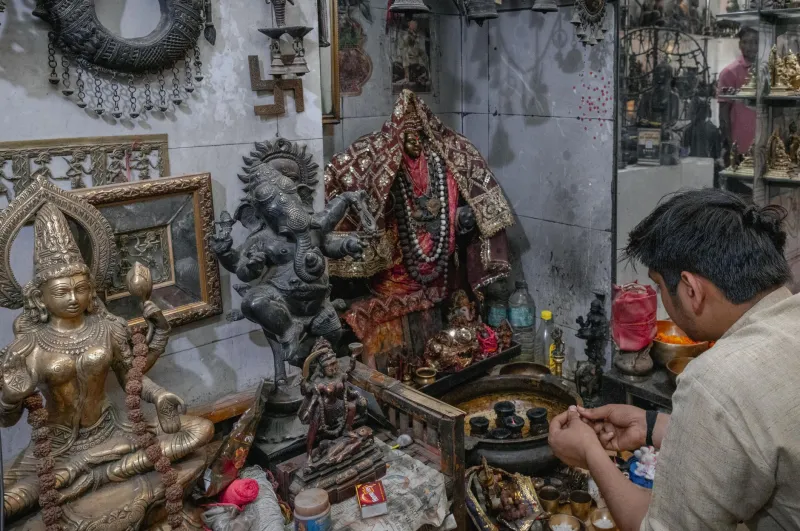
Every image of Vitthal, the presiding deity of Pandharpur, carries the same unmistakable silhouette: a dark, slightly tilted figure standing atop a brick, hands resting firmly on the hips, gaze steady, unhurried, seemingly waiting. Art historians call it sthambha mudra; devotees call it simply "Vitthal's stance." Whatever the label, the posture has endured for at least eight hundred years, reproduced in countless paintings, bronzes, and calendar prints — including, now, on shelves in homes from New Jersey to California.
It is worth asking, seriously, what this standing God is doing. And it is worth asking what He might be saying to a nation that has engineered waiting out of nearly every corner of its life.
The Theology of the Pose
The most beloved explanation comes from the Pundalik legend. The saint Pundalik, devoted above all to the care of his aged parents, kept the visiting Krishna waiting at his door, offering him a brick on which to stand. Krishna — the Lord of the universe — waited. And, the tradition says, He is waiting still. The image at Pandharpur is not a depiction of a moment; it is, in devotional understanding, a permanent condition. Vitthal stands because He has chosen to remain in the posture of expectation, honoring a human being's priorities.
Scholars of the Varkari tradition have offered complementary readings. Some trace the iconography to earlier standing Vishnu images of the Deccan; others note the brick, or vitu, as the likely root of the name Vitthal — "the one who stands on the brick." Folk theology adds its own warmth: that the slight tilt of the head and the planted hands suggest a deity at ease, a God relaxed enough to be approachable, not enthroned in distant majesty.
What unites these interpretations is a striking inversion of divine posture. Most gods of most traditions are depicted enthroned, seated above time. Vitthal stands in time — patient, attentive, willing to wait for the slow human being in front of Him.
A Culture That Cannot Wait
Set this image against the texture of contemporary American life. Two-day shipping feels sluggish. Streaming services removed the weekly wait for episodes. Grocery delivery arrives within the hour; the average attention spent on a single piece of online content is measured in seconds. We have not merely tolerated speed; we have organized our economy around the elimination of delay.
The costs are familiar by now — restlessness dressed up as productivity, the inability to sit through a meal without a screen, the low-grade anxiety that surfaces the moment nothing is happening. Psychologists have a literature on this; the Warkaris had a word for it first. The mind that cannot wait, the tradition suggests, is a mind that cannot be present, and a mind that cannot be present cannot truly love — God or neighbor.
The Pilgrimage as the Antidote
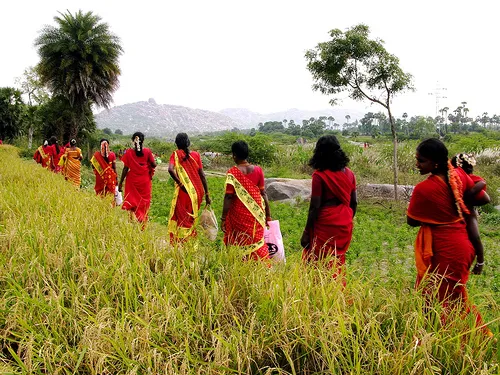
Here the Varkari practice becomes not merely devotional but diagnostic. The Wari — the walking pilgrimage to Pandharpur, undertaken over weeks in the heat of the Ashadha monsoon — is, by the standards of American efficiency, absurd. One could drive to Pandharpur in hours. The Warkaris take the better part of a month, singing abhangs the entire way.
But the slowness is the point. The pilgrimage cannot be rushed because its purpose is not arrival; it is transformation of the traveler, mile by mile, verse by verse. The destination is a standing God, and the pilgrims arrive in the only posture appropriate to meet Him: at walking pace, having practiced patience for weeks, having surrendered the demand for control over time itself.
The American practitioner cannot always walk to Pandharpur. But the logic translates. The commute taken without a podcast. The queue endured without the phone. The twenty minutes of stillness before the day begins. Each is a small Wari — a deliberate re-entry into time, an agreement to move at the speed of attention rather than the speed of appetite.
What the Waiting God Teaches
There is a temptation to read Vitthal's posture sentimentally — a cute image of a patient deity. The deeper reading is more demanding. If God stands waiting for us, then the urgency is not His; it is ours. The brick beneath His feet is a reminder that He will meet us wherever our actual lives are — in the middle of chores, mid-errand, mid-obligation. He does not require us to be ready. He requires only that we eventually turn around.
And when we do, we find a God who has not been pacing, checking, fretting. He has simply been there — hands on hips, weight settled, entirely present.
That, perhaps, is the posture American devotees most need to learn. Not the elimination of waiting, but the transformation of it: waiting not as dead time to be optimized away, but as the very ground on which the divine chooses to stand. Vitthal has been patient with us for eight centuries. Learning to be patient — with the day, with one another, with ourselves — may be the least we can offer in return.