Sacred Union, Timeless Lessons: What Vitthal and Rukmini Teach Us About Love That Lasts
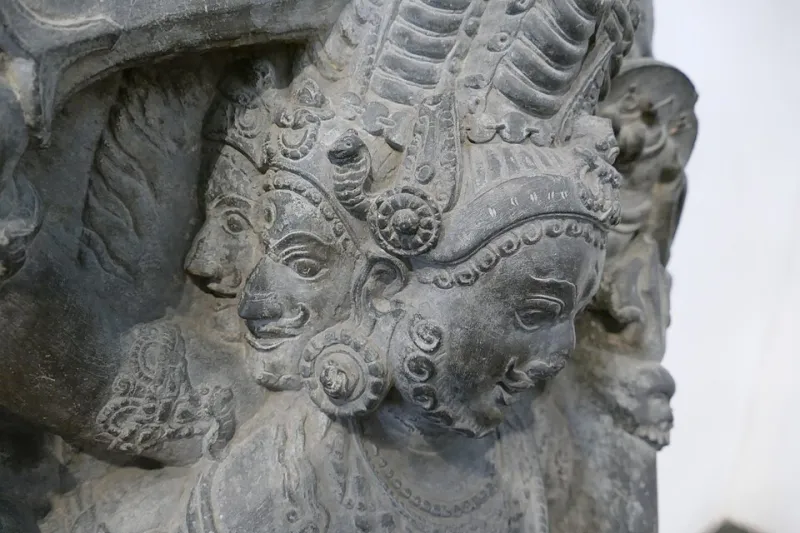
Photo: Kritzolina, CC BY-SA 4.0, via Wikimedia Commons
In an age of dating apps, attachment theory podcasts, and relationship coaches charging by the hour, it may seem unusual to turn to a 3,000-year-old mythological narrative for romantic guidance. Yet the divine love story of Lord Vitthal — the dark-complexioned, lotus-eyed deity standing arms akimbo on the banks of the Bhima River in Pandharpur — and his consort Rukmini holds within it a depth of wisdom that modern psychology is only beginning to articulate.
At Shree Vitthal Rukmini, we believe that the sacred is not separate from the everyday. The relationship between Vitthal and Rukmini is not merely a celestial fairy tale. It is a living, breathing model of what it means to love with intention, devotion, and grace — qualities that remain profoundly relevant whether you are navigating a new relationship in Nashville or rebuilding trust in a long marriage in Seattle.
Who Are Vitthal and Rukmini? A Brief Introduction
For those new to this tradition, Lord Vitthal — also known as Vithoba, Pandurang, or Vitthal — is a form of Lord Vishnu or Krishna worshipped primarily in the Maharashtra region of India. He stands eternally on a brick (the veet), arms resting on his hips, gazing outward with calm, all-encompassing love. Rukmini, his principal consort, is an avatar of Goddess Lakshmi and represents divine grace, prosperity, and unwavering devotion.
Their union is celebrated across centuries of Marathi literature, the Warkari tradition, and the devotional poetry of saints like Dnyaneshwar, Namdev, and Tukaram. But beyond the festivals and the hymns lies a relationship narrative of extraordinary subtlety — one that rewards careful reflection.
The Architecture of Intentional Love
One of the most striking aspects of the Vitthal-Rukmini relationship is its foundation in choice. Rukmini, according to the Bhagavata Purana and related texts, actively sought Krishna-Vitthal as her husband. She did not wait passively. She sent a message, expressed her desire clearly, and invited divine intervention. This is not the story of a woman who surrendered her agency — it is the story of a woman who exercised it in full alignment with her spiritual values.
For contemporary readers, this is significant. Rukmini's act of deliberate choosing mirrors what relationship researchers today call intentional commitment — the conscious decision to invest in a specific person not out of circumstance or obligation, but out of genuine recognition of their worth. She saw the divine in Vitthal and moved toward it with clarity.
Modern couples, particularly those in the United States who are increasingly delaying marriage and approaching long-term partnership with greater discernment, would do well to reflect on this model. Choosing a partner is not merely a romantic act. It is, in the tradition of Rukmini, a spiritual one.
Devotion as a Daily Practice, Not a Grand Gesture
Perhaps the most countercultural lesson embedded in the Vitthal-Rukmini narrative is the idea that love is not primarily expressed through extraordinary moments but through consistent, devoted presence. The Warkari pilgrims who walk hundreds of miles to Pandharpur twice a year do so not to witness a miracle, but to simply be in the presence of the divine — to show up, again and again, without drama or expectation.
This mirrors what marriage therapists like Dr. John Gottman describe as the "small moments" that constitute the real fabric of a lasting relationship. Daily check-ins. Attentive listening. Showing up even when you are tired. These are acts of bhakti — devotion — in the most practical sense.
In the iconography of the temple at Pandharpur, Vitthal stands with his arms on his hips in a posture of patient waiting. He is not rushing toward the devotee. He is simply present, steady, and available. This is a profound metaphor for the kind of grounded presence that sustains a partnership through the inevitable fluctuations of life.
The Balance of Surrender and Sovereignty
One of the most misunderstood aspects of devotional love — whether directed at the divine or at a partner — is the concept of surrender. In Western culture, surrender often carries connotations of weakness or loss of self. In the Vitthal-Rukmini tradition, it means something quite different.
Rukmini's surrender to Vitthal is not an erasure of her identity. She remains, throughout the mythology, a figure of immense dignity and spiritual authority. Her devotion does not diminish her — it elevates her. This distinction is crucial. True devotional love, as modeled in this sacred relationship, involves offering the fullness of who you are, not the abandonment of it.
For American practitioners exploring Hindu spirituality, this nuance is especially important. The bhakti path is not one of passivity. It is one of wholehearted, conscious engagement — with the divine, with a partner, and with oneself.
Rukmini's Wisdom: Communicating the Sacred Desire
Rukmini's famous letter to Krishna — detailed in the tenth canto of the Bhagavata Purana — is one of the earliest and most eloquent examples of direct, honest communication in a romantic context. She articulated her feelings, her fears, her hopes, and her spiritual reasoning with remarkable clarity. She did not suppress her desire out of social convention. She expressed it with both vulnerability and dignity.
This is a model worth contemplating. Many relationship difficulties in contemporary life stem not from a lack of feeling, but from a failure to express those feelings with honesty and courage. Rukmini's letter reminds us that sacred communication — speaking from the heart with truthfulness and respect — is itself a spiritual act.
Bringing Ancient Devotion into Modern Life
How might a couple in Chicago or Austin actually integrate these lessons? The practices are simpler than one might expect.
Begin by creating a shared space of stillness. Whether through a brief morning ritual, a shared prayer, or simply five minutes of quiet together before the day begins, the act of cultivating presence mirrors the devotional posture of the Warkari tradition. You are, in effect, showing up for your relationship as the pilgrim shows up for Pandharpur.
Consider also the practice of gratitude as devotion. In the bhakti tradition, the devotee regularly acknowledges the grace of the divine. In a partnership, this translates to the deliberate, verbal acknowledgment of your partner's qualities and contributions — not only on anniversaries, but on ordinary Tuesdays.
Finally, reflect on the quality of your commitment. Is it reactive — shaped primarily by fear, habit, or external pressure? Or is it, like Rukmini's, a conscious, renewed choice? The difference between these two orientations is, in many ways, the difference between a relationship that endures and one that merely persists.
The Eternal Relevance of a Divine Model
The love story of Vitthal and Rukmini has endured not because it is fantastical, but because it is, at its core, deeply true. It speaks to something universal in the human experience: the longing for a love that is steady, chosen, spiritually alive, and mutually elevating.
In a cultural moment where many Americans report feeling disconnected, lonely, and uncertain about the future of committed partnership, the ancient wisdom encoded in this sacred relationship offers something rare — not a formula, but a compass. Not a guarantee, but an aspiration worthy of our most devoted effort.
At Shree Vitthal Rukmini, we hold this story as more than mythology. We hold it as a living teaching, offered freely to all who seek to love more deeply, more consciously, and more divinely.